
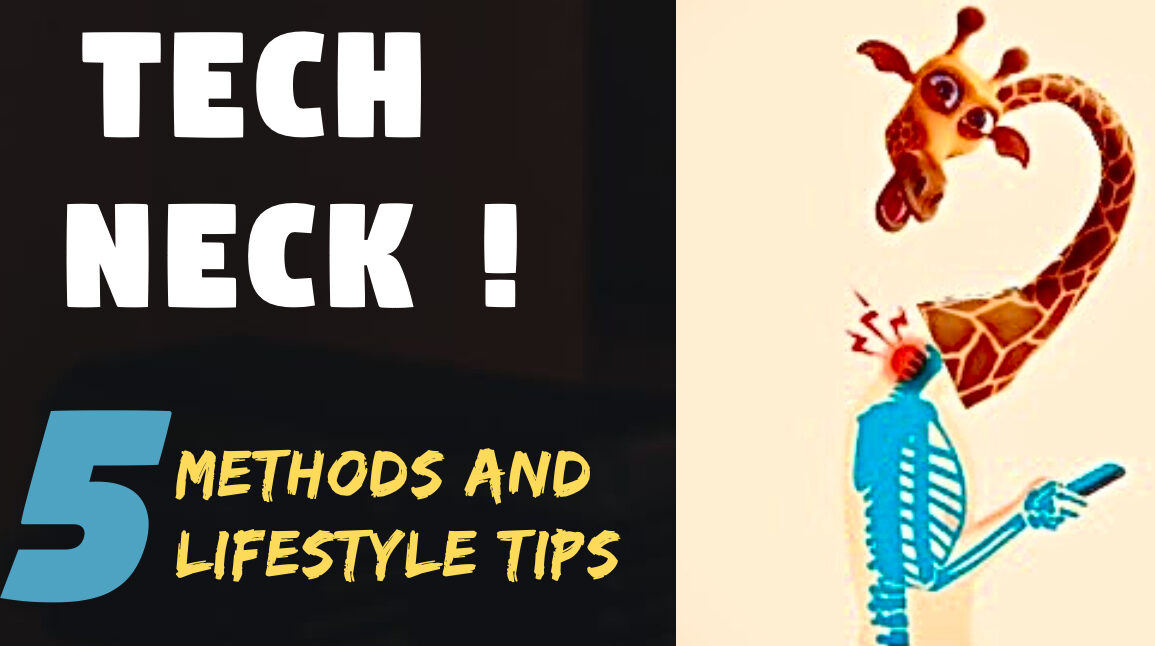
What is it?
Tech neck describes a repetitive stress injury or overuse syndrome in the neck, caused by prolonged use of mobile devices or even desk tops with the head bent downward. Also called text neck, is commonly associated with texting, but it can be related to many activities performed on phones, tablets or desk tops while looking downward, such as surfing the web, playing games or even during your day to day work.

How does it occur?
The weight of the head is a key factor for text neck pain. The neck’s muscles, tendons, and ligaments are meant to support the head’s weight of 10 to 12 pounds in a neutral position balanced atop the cervical spine. As you bend your neck forward, the stress on your cervical spine increases exponentially. Some experts say that the stress on your cervical spine doubles with every inch your head tilts down.
When texting on a phone, it is common to bend the head forward and look down at a 45- or 60-degree angle, which increases the force to about 50 to 60 pounds .
If you take into account that you could spend around three hours a day staring at your phone and it adds up to extreme stress on your neck.
You probably been staring at your device for years and haven’t noticed any problems. That’s where this condition’s subtle nature is important to understand. Its effects are insiduous but cumulative. Tech Neck has been linked to headaches, neurological issues and even depression and heart disease. These symptoms can creep up on you slowly, but chances of a negative impact on your health increase each time you hunch over your phone.
What are the symptoms?
Text neck symptoms commonly include one or more of the following:
- Pain in the neck, upper back, and/or shoulder. This pain may be located in one specific spot and feel intense or stabbing, or it may be a general achiness and soreness that covers a broader region, such as spanning from the bottom of the neck and into the shoulder(s).

- Forward head posture and rounded shoulders. Muscles in the neck, chest, and upper back can become deconditioned and imbalanced due to prolonged forward head posture. It was used to be known as dowagers hump but is simply means a hunch upper back or kyphosis. This deconditioning can make it difficult to maintain good posture with the ears directly over the shoulders.

- Stiff neckThe neck, upper back, and shoulders may all experience some tightness and reduced mobility.

- Headache. (cervicogenic Headcahe)Muscles at the base of the neck could go into spasm and become painful, or pain could also be referred from the neck up into the head. Excessive amounts of time looking at screens, regardless of posture, may also increase the risk for eyestrain and headache.

- Arthritis-Text neck may also possibly lead to chronic problems due to early onset of arthritis and Increased pain when neck flexion.
- Radiating Pain -If a cervical nerve becomes pinched, pain and possibly neurological symptoms can radiate down your arm and into your hand

How to prevent and treat?
Here are 5 tips to get rid of tech neck !
1.Raise the phone. Move the phone (and other devices) up closer to eye level so the head does not have to be tilted forward.

2.Take frequent breaks. Spend some time away from the phone—or any type of head-forward posture. If needed, use an alarm or app to set automatic reminders to take breaks from handheld devices.

3.Stand up straight. Good posture, with the chin tucked in and shoulders pulled back, keeps the body aligned in a neutral position.

Below are 4 tips to help you to stand straight.
- Pretend you’re standing against a wall to measure your height.
- Hold your head straight and tuck in your chin. Your ears should be over the middle of your shoulders.
- Stand with your shoulders back, knees straight, and belly tucked in.
- A good idea is to have someone record a video of you when you stand and sit and then go on to correct the posture as I mentioned before.
4. Arch and stretch. Arch the neck and upper back backward periodically to ease muscle pain.
- Tucks – Chin tucks, Shoulder tucks
- Stretches- Ear to shoulder stretch ,Roof to chest stretch, Chest stretch, Chin to shoulder stretch
- Chin tucks- Pull your chin towards your spine. You will feel the muscles in the back of your neck working slightly. Hold for 5 seconds and keep breathing. Do 10-15 at a time.

- Shoulder tucks– Your shoulder blades together, down and back. You will feel the muscles in the upper back working. Hold for 5 seconds and keep breathing. Do 10-15 times.

- Ear to shoulder stretch-Sit up straight and tilt your head to one side so your ear goes towards your shoulder. This will stretch the opposite side neck muscles. Hold for 30-60 seconds on each side

- Roof to chest stretch-Sit up straight and look at the roof and then slowly bend your neck down towards your chest. At the bottom of the movement you will feel a stretch in the back of your neck. Hold this for 30-60 seconds.

- Chest stretch-Stand in a doorway and put both hands on either side of the door about head level. Lean forward until you feel a light stretch in your chest. Hold about 30 seconds and do 2-3 times.

- Chin to shoulder stretch-Sit up straight. start by looking directly in front and slowly look to the side as if you are looking over your shoulder. You will feel the same side muscles stretching. Hold about 30 seconds and do 2-3 times. Repeat on the opposite side.

5.Exercise regularly. A strong, flexible back and neck are more able to handle extra stress. Some research indicates that teenagers who are active in low-impact team sports or endurance sports are less likely to have neck pain.

https://www.myspineworld.com/6-important-steps-for-you-to-attain-the-best-posture/
Treat your spine with respect and it will respect you back. Have a great posture and a fruitful day!! See you soon with some more spine tips in My Spine World.Remember, we got your back and neck!
https://www.myspineworld.com/18-back-exercises-for-bouncing-back/