


What is pyriformis syndrome?
Piriformis syndrome is a condition in which the piriformis muscle, located in the buttock region, spasms and causes buttock pain. The piriformis muscle can also irritate the nearby sciatic nerve and cause pain, numbness and tingling along the back of the leg and into the foot (similar to sciatic pain).Hence the controversy.
The muscle
The piriformis muscle originates from the pelvic surface of the sacral segments S2-S4 in the regions between and lateral to the anterior sacral foramina, the sacroiliac joint (superior margin of the greater sciatic notch), the anterior sacroiliac ligament and occasionally the anterior surface of the sacro-tuberous ligament. It passes through the greater sciatic notch to insert onto the greater trochanter of the femur.

The Pyriformis is functionally involved with external rotation, abduction and partial extension of the hip.
The sciatic nerve generally exits the pelvis below the belly of the muscle, however many congenital variations may exist.
The relationships between the Pyriformis and sciatic nerve have been classified by Beaton and Anson using a six category classification system. An anomalous relationship would be labelled between type ‘‘B’’ through type ‘‘F’’ since type ‘‘A’’ is considered to have a normal relationship between the PM and the sciatic nerve.

It can be primary or secondary.
Primary Piriformis Syndrome
Primary piriformis syndrome has an anatomical cause, with variations such as a split piriformis muscle, split sciatic nerve, or an anomalous sciatic nerve path. Among patients with piriformis syndrome, fewer than 15% of cases have primary causes. At present, there are no accepted values for the prevalence of the anomaly and little evidence to support whether or not the anomaly of the sciatic nerve causes piriformis syndrome or other types of sciatica.
Secondary Piriformis Syndrome
Secondary piriformis syndrome occurs as a result of a precipitating cause, including macrotrauma, microtrauma, ischemic mass effect, and local ischemia.
Piriformis syndrome is most often (50% of the cases) caused by macrotrauma to the buttocks, leading to inflammation of soft tissue, muscle spasms, or both, with resulting nerve compression.
Muscle spasms of the PM are most often caused by direct trauma, post-surgical injury, lumbar and sacroiliac joint pathologies or overuse.
PS may also be caused by shortening of the muscles due to the altered biomechanics of the lower limb, low back and pelvic regions. This can result in compression or irritation of the sciatic nerve. When there is a dysfunction of the piriformis muscle, it can cause various signs and symptoms such as pain in the sciatic nerve distribution, including the gluteal area, posterior thigh, posterior leg and lateral aspect of the foot.
Microtrauma may result from overuse of the piriformis muscle, such as in long-distance walking or running or by direct compression. An example of this kind of direct compression is known as “wallet neuritis”, which is a repetitive trauma caused by sitting on hard surfaces.
Symptoms of Piriformis Syndrome
Most commonly, patients describe acute tenderness in the buttock and sciatica-like pain down the back of the thigh, calf and foot. Typical piriformis syndrome symptoms may include:
- A dull ache in the buttock
- Pain down the back of the thigh, calf and foot (sciatica)
- Pain when walking upstairs or inclines
- Increased pain after prolonged sitting
- Reduced range of motion of the hip joint
Diagnosing Piriformis Syndrome
Diagnosis of piriformis syndrome is based on a review of the patient’s medical history, a physical examination and possibly diagnostic tests.
Piriformis syndrome is often a diagnosis made through a process of ruling out other possible conditions that may be causing the patient’s symptoms, such as a lumbar disc herniation or sacroiliac joint dysfunction.
Physical exam
The physical exam will include an examination of the hip and legs to see if movement causes increased low back pain or lower extremity pain (sciatica pain).
Typically, motion of the hip will recreate the pain. The exam will also identify or rule out other possible causes of the sciatica pain, such as testing for local tenderness and muscle strength.

Medical history
A medical history includes an in-depth review of the patient’s symptoms, such as what positions or activities make the symptoms better or worse, how long the symptoms have been present, if they started gradually or after an injury, and what treatments have been tried.
It will also include a review of conditions that may be in the patient’s family, such as arthritis.

Diagnostic tests
X-rays and other spinal imaging studies cannot detect if the sciatic nerve is being irritated at the piriformis muscle. However, diagnostic tests (such as X-rays, MRI and nerve conduction tests) may be conducted to exclude other conditions that can cause similar symptoms to piriformis syndrome.

An injection of anesthetic with or without steroids may help to confirm if the piriformis muscle is the source of the symptoms.

Treatment
Almost every treatment approach for piriformis syndrome will include a focus on carefully and progressively stretching the piriformis muscle.
Stretches for Piriformis Syndrome
A number of stretching exercises for the piriformis, hamstrings and hip extensors may help decrease the painful symptoms along the sciatic nerve and return the patient’s range of motion.
Piriformis stretches
There are a number of ways to stretch one’s piriformis muscle.
My 5 favourite stretches for pyriformis syndrome
1. Figure of 4 stretch -to same shoulder
a. Lie on your back
b. Bend your knee and take the ankle on the side u want to stretch over or just on top of the opposite knee. Now the knee forms a figure of 4 shape.
c. Take both of your hands and grip the knee of the other leg and pull it towards you.
d. Feel the stretch on your piriformis. Hold for 30 seconds. Repeat 3 times. Repeat on the unaffected side as well.

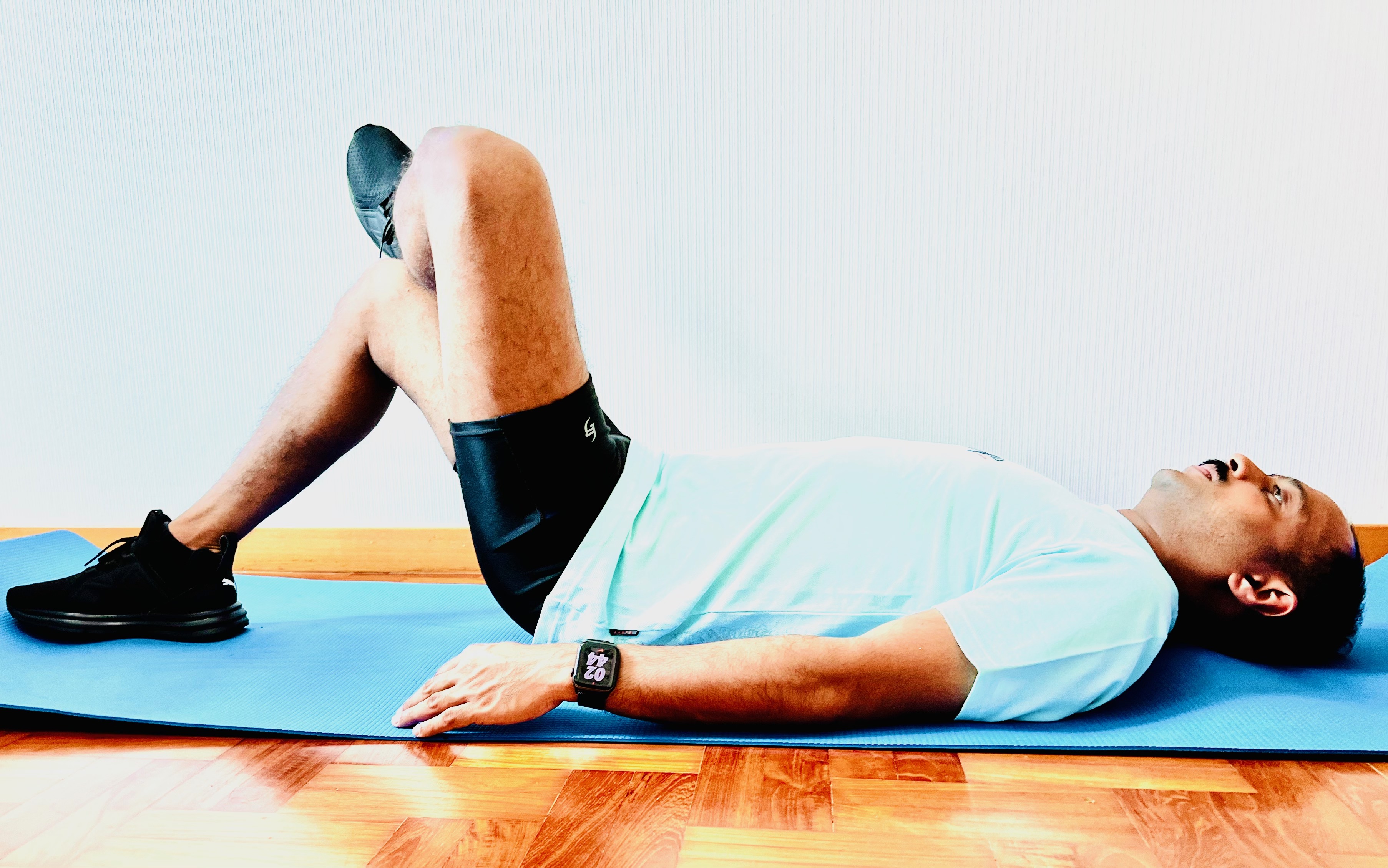

2. Figure of 4 stretch – to opposite shoulder
a. Lie on your back
b. Bend your knee and take the ankle on the side u want to stretch over or just on top of the opposite knee. Now the knee forms a figure of 4 shape
c. Grab the knee on the affected side and pull it up and over towards opposite shoulder
d. Feel the stretch on your piriformis. Hold for 30 seconds. Repeat 3 times. Repeat on the unaffected side as well.


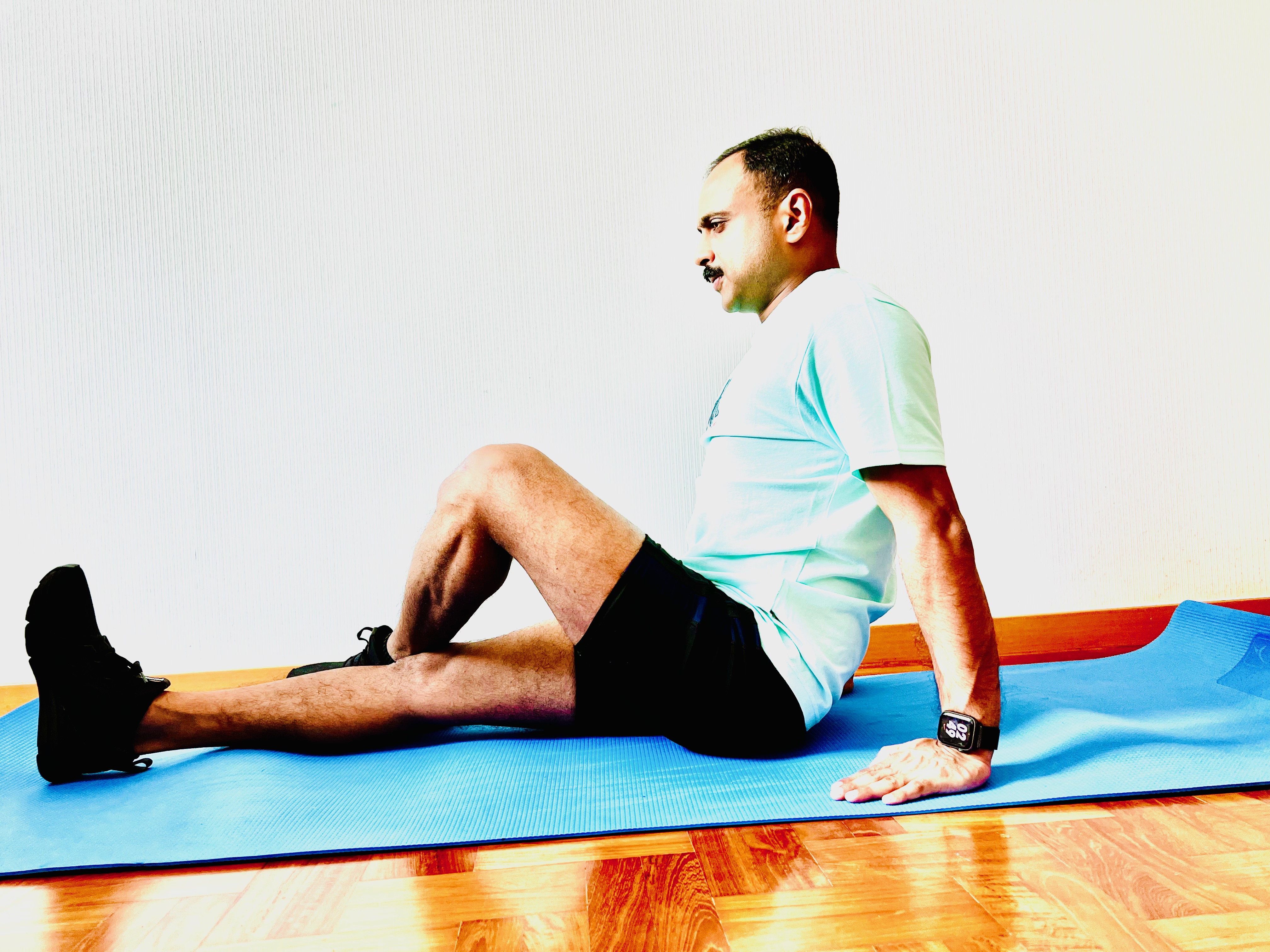
3. Yoga pose stretch
a. Sit with both of your knees stretched out.
b. The leg you want to stretch, bend the knee and place it on the other side of the opposite knee.
c. Twist your body and place the opposite elbow on the inside of the bent knee and stretch it while twisting your body towards the affected side.
d. Feel the stretch on your piriformis. Hold for 30 seconds. Repeat 3 times. Repeat on the unaffected side as well.
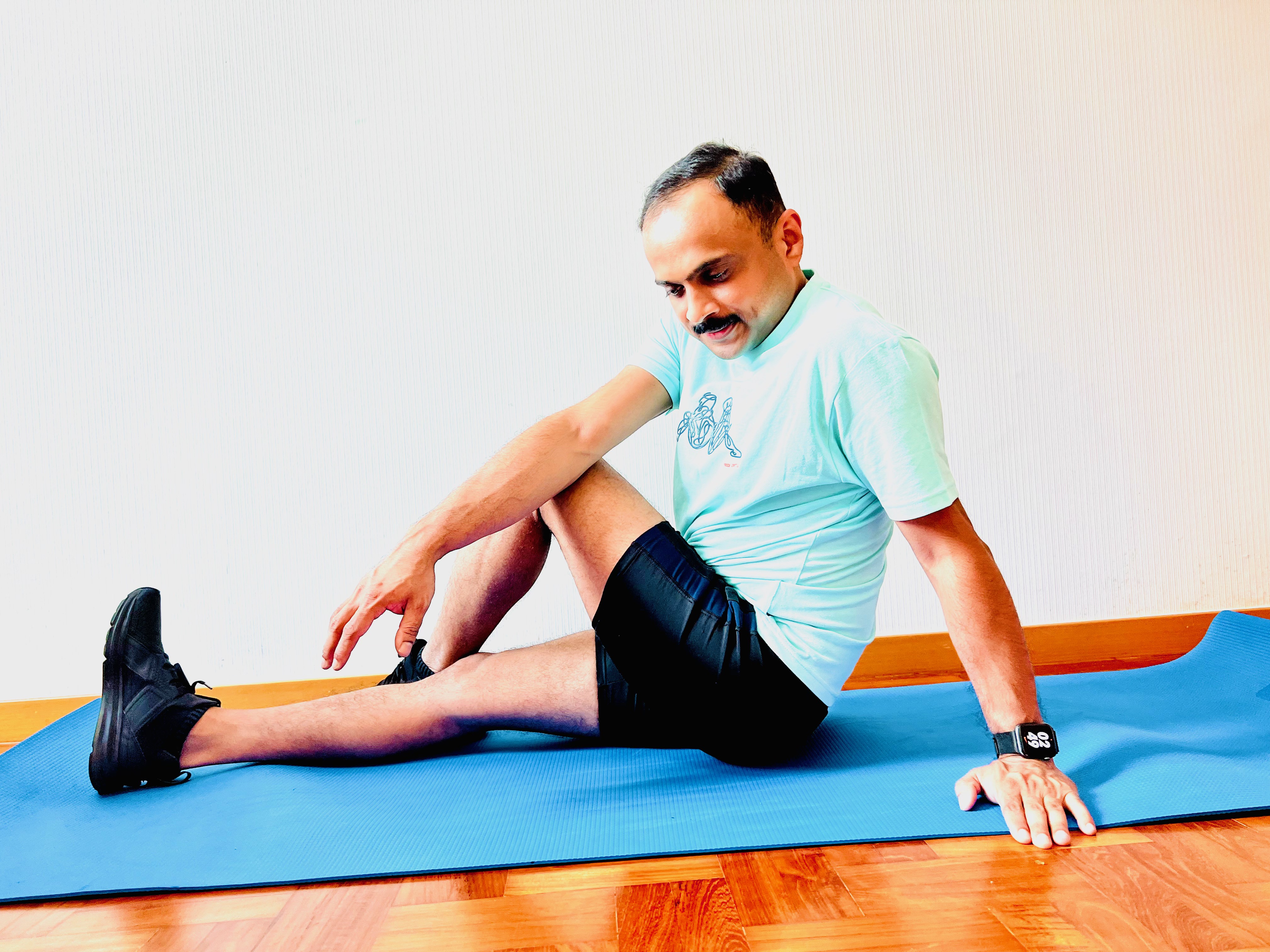
4. 90-90 stretch
a. Sit with the affected knee bent 90 degrees inwards and the back leg with the knee bent outwards both at 90 degrees.
b. Hold the knee or ankle of the affected side and lean in or forward
c. Feel the stretch on your piriformis. Hold for 30 seconds. Repeat 3 times. Repeat on the unaffected side as well.


5. Simple Seated Stretch
a. Start by sitting in a chair and cross your sore leg over the knee of your other leg.
b. While keeping your spine straight, bend your chest forward. If you don’t feel pain, bend forward a little more.
c. Hold this position for about 30 seconds.
d. Repeat this stretch with your other leg.


Hamstring stretches
Stretching the hamstrings (the large muscle along the back of each thigh) is important to alleviate any type of sciatic pain. There are a number of ways to stretch the hamstrings:
- Place two chairs facing each other. Sit on one chair and place the heel of one leg on the other chair. Lean forward, bending at the hips until a gentle stretch along the back of the thigh is felt, and hold the stretch.
- Lie on the back with both legs straight. Pull one leg up and straighten by holding on to a towel that is wrapped behind the foot until a mild stretch along the back of the thigh is felt.
- Prop the back of your heel up on a table, keep your back straight, and lean forward at the hips. Hold for 20-30 seconds. Repeat 3 times.


Again, try to work up to holding each stretch for 30 seconds and repeat three times each day.
How can we prevent pyriformis syndrome from getting worse?
a.Avoid sitting for a long period; stand and walk every 20 minutes,
b. Make frequent stops when driving to stand and stretch.
c. Prevent trauma to the gluteal region and avoid further offending activities.
d. Daily stretching is recommended to avoid the recurrence of the piriformis syndrome.
Range of motion exercises
A physical therapist, physiatrist, chiropractor or other qualified health practitioner can develop a customized program of stretching and range of motion exercises to help stretch the muscle and decrease spasm.
Deep Massage
Deep massage therapy (manual release) by a qualified specialist is thought to enhance healing by increasing blood flow to the area and decreasing muscle spasm
Ice Packs and Ice Massage
At the onset of pain, lie in a comfortable position on the stomach and place an ice pack on the painful area for approximately 20 minutes. Repeat as needed every 2 to 4 hours.
It may be more helpful to combine a gentle massage with the ice. Lie on the stomach and have someone gently massage the painful area with a large ice cube. If ice is applied directly to the skin (instead of a cold pack), limit it to 8 to 10 minutes to avoid an ice burn.
If specific activities are usually followed by increased pain, it may be a good idea to apply ice immediately following the activity.
Heat Therapy
Some people find it helpful to alternate cold with heat. If using a heating pad, lie on the stomach and place the heating pad on the painful area for up to 20 minutes
Medications for Sciatica Pain
Since most episodes of pain include some type of inflammation, non-steroidal anti-inflammatory medications (NSAIDs), such as ibuprofen or naproxen, may help decrease inflammation in the affected area.
Piriformis injection
A local anesthetic and corticosteroid may be injected directly into the piriformis muscle to help decrease the spasm and pain. The purpose of an injection is usually to decrease acute pain to enable progress in physical therapy.
Botox injection
For persistent piriformis spasm that is resistant to treatment with anesthetic/corticosteroid injections, an injection of botulinum toxin (e.g. Botox®), a muscle weakening agent, may be useful. The goal of the injection is to help the muscle relax and help reduce pressure on the sciatic nerve.
Piriformis syndrome continues to be a controversial diagnosis for sciatic pain. A complete neurological history and physical assessment of the patient is essential for an accurate diagnosis and is a diagnosis of exclusion. Optimizing the therapeutic approach requires an interdisciplinary evaluation of treatment.
See you soon with some more spine tips in My Spine World.Remember, we got your back!